Ever since it was founded, the CAYC (Centro de Arte y Comunicación), helmed by the cultural promoter, artist, and businessman Jorge Glusberg, was intended as an interdisciplinary space where an experimental art movement could flourish. The establishment of collaborative networks connecting local and international artists and critics played an important role in this process. As part of the interdisciplinary action it had always encouraged, the CAYC promoted experimental practices, appropriating a variety of examples of Argentine art from the 1960s.
The early 1970s in Argentina were marked by an escalating level of conflict in sociopolitical terms after a succession of de facto military governments. Discussions about the role of art and the artist became increasingly heated at a time when the social and political situation demanded urgent attention.
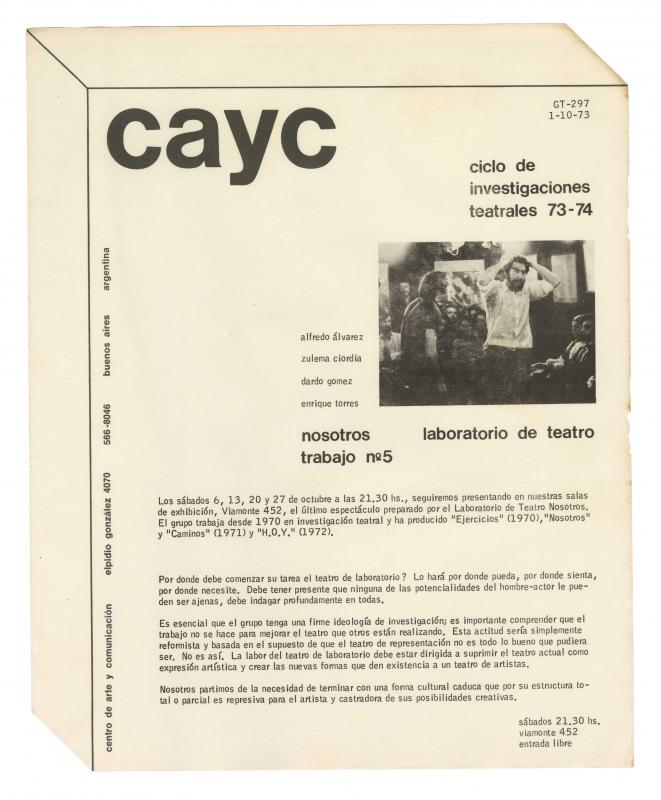
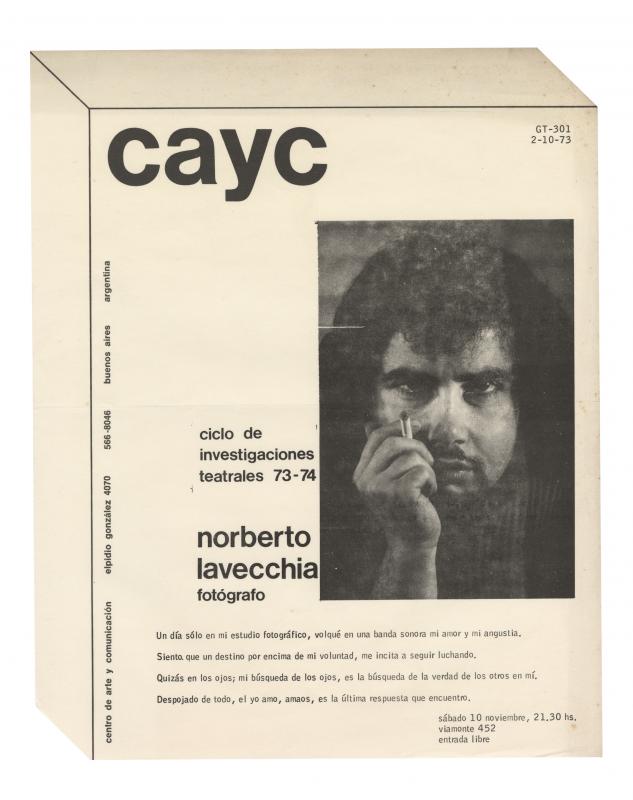
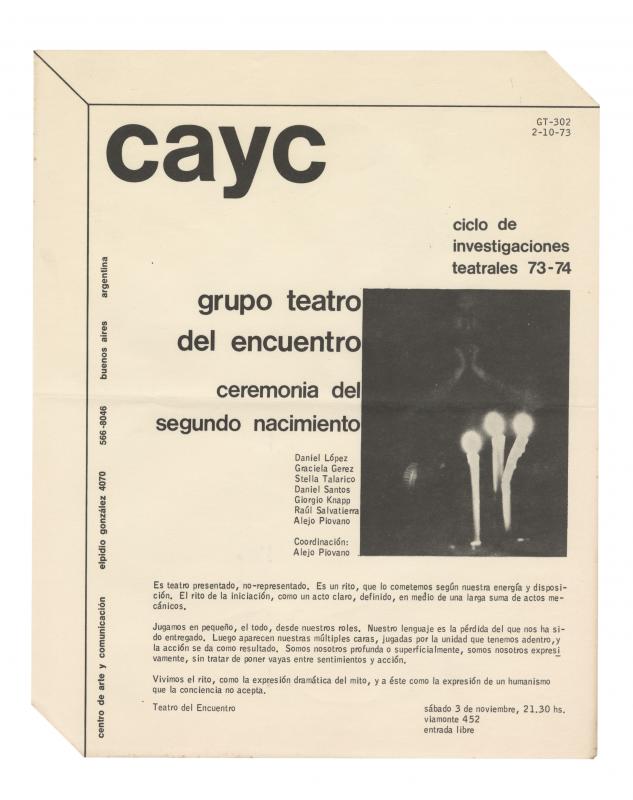
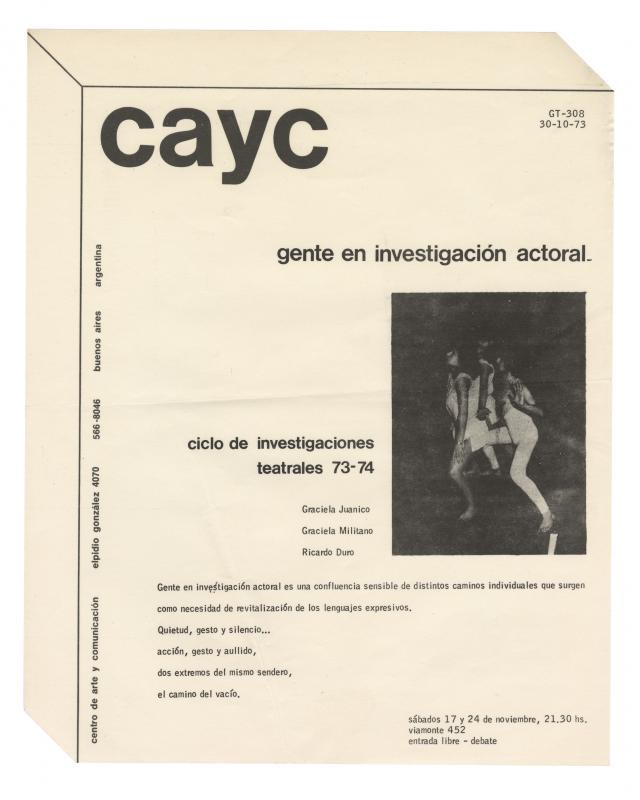
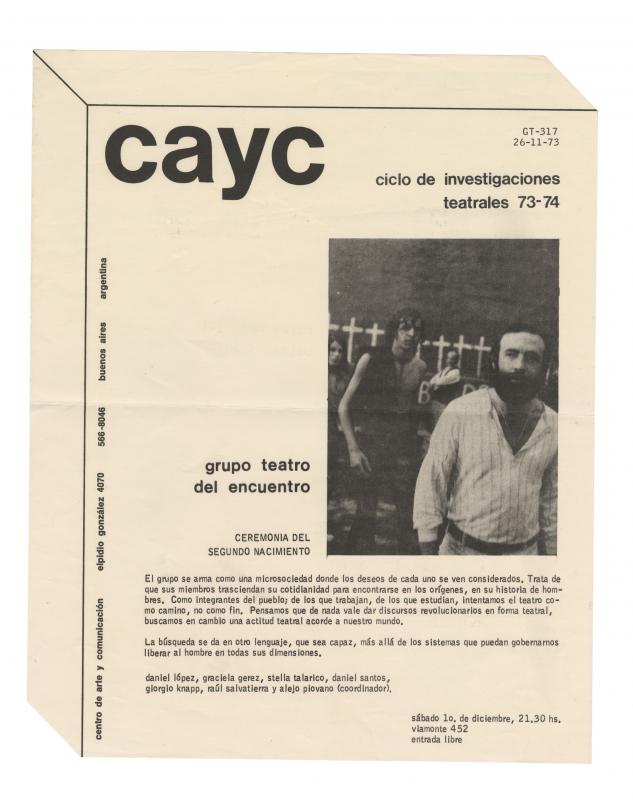
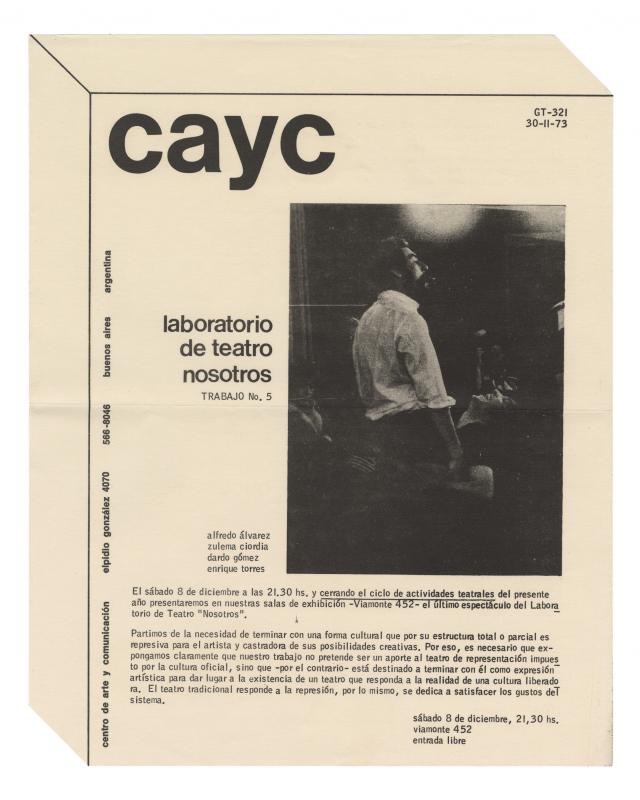
This newsletter announces a performance of Ceremonia del segundo nacimiento (Ceremony of the Second Birth), a production created by the Teatro del Encuentro group in October 1973 at the CAYC. After being part of the experimental theater scene at the Instituto Di Tella in the 1960s, Alejo Piovano coordinated this project for the Ciclo de Investigaciones Teatrales organized by the center in October through November 1973 (GT-297; doc. no. 1478830, GT-301; doc. no. 1478985, GT-302; doc. no. 1478986, GT-308; doc. no. 1478837, GT-317; doc. no. 1478987, GT-321; doc. no. 1478841). Other groups also took part in the Ciclo, approaching theater as a political practice through which to promote social change.
In the text published in this newsletter, the group explained their aesthetic-anthropological approach, which was based on “rites” performed as expressions of the myths of mankind. Performing them provides an opportunity to distance oneself from everyday routines and attain a sense of freedom. These rites are performed with a minimal reliance on props, inspired by Jerzy Grotowski (1933–1999) and his “poor theater” concept. His “Teatro Pobre”—using only the actors’ bodies and voices on an “empty” stage with no scenery—was a direct reference to performance art, an experimental movement that the CAYC promoted in the local art scene.